Asalaam alaikum ar ramatuallahi wa barakatuhu. I pray that this finds all of you out there in good health and eemaan. A week or so ago while I was at work, I was approached by a man who had a genuine "Muslim question". He asked me, "Do all Muslims believe in Shari'ah?" To which I replied, "Shari'ah is the divine law of God. It's His law, so as Muslims, we should all believe in it." He said, "Oh, really?" I told him that "shari'ah law isn't the evil thing that the west has made it out to be."
It has been predominately associated with Islam and has been given a bad wrap by many people, especially in the US. I have heard many of those who oppose it stressing about how it shouldn't be legalized or recognized but those people don't understand what shari'ah is, how it works or that it would ultimately have little to no effect on those who aren't Muslim.
Some background on Shari'ah for my non-Muslim friends.
Shari'ah was revealed by Allaah in the Holy Qur'an and deals with many topics including crime, politics and economics, as well as personal matters such as sexual intercourse, hygiene, diet, prayer, every day etiquette and fasting. There are varying interpretations of shari'ah law but in its strictest definition it is considered the infallible law of God while the human interpretation of the laws are known as fiqh.
The two primary sources of shari'ah law are versus in the Qur'an and the examples set by Prophet Muhammad in the Sunnah. Where shari'ah is recognized, it is interpreted by Islamic judges and the responsibilities of the religious leaders (imams) varies. If questions arose that weren't directly addressed in either of the two primary sources, the religious scholars are looked to to form fitting rulings.
** This isn't everything about shari'ah but in sha Allaah it's enough to spark interest in the subject and give people a starting point to their own research**
Now here comes the part where I voice my opinion because by now, you should know that I have one (haha!).
Many states (including mine!) and countries have chosen to ban shari'ah law. While I do understand the fears that a lot of people have regarding it and yes, I do understand that in many countries, there are accounts of abuse and/or neglect because of a possible light or lack of punishment for certain crimes. However, for those of us who wish to practice our faith completely, we should have the opportunity to follow the laws of Allaah. Now, while I also understand that God's divine law is the ultimate law above all others, and technically, submission to local laws can be seen as putting man over God, I'm not saying that we should disrespect the local laws of our city/state/country. I am only saying (remember, this is my opinion and it may or may not be shared by anyone else) as long as we are following those laws and we are not harming anyone, partaking in illegal activities or committing crimes, we should be allowed to follow the laws that Allaah has written for us.
I truly and sincerely hope that this clears up some things or at the very least sparks some interest in the subject and initiates research and thought on the subject in sha Allaah. Please remember that this is my opinion and my page. I do not expect anyone to agree with me. Also, sisters please feel free to add comments containing any other pertinent information that you think others would like to know regarding this subject. Your thoughts are always welcome!
Sunday, May 25, 2014

Thursday, May 15, 2014
Good Deeds (Advice to a Customer)
Asalaam alaikum wa rahmatullahi wa barakatuhu. I get asked all the time about what the "thing" on my head is called, if I'm a Muslim or not and why I chose Islaam. It is pretty rare that I get asked my opinion on what someone else should do with their life but a couple of days ago, that happened.
An older man who is a semi regular customer at my store came in for his drink and snack. He is a veteran of the US military although I don't think he told me which branch, and works (or at least worked) for Goodwill next door. He is always friendly but this day I could tell he had something on his mind. I don't pry into the lives of others if I can help it so when he stopped in front of the counter wanting to talk, it was a little surprising. He said to me, "Can I ask you a question?" Without me really saying anything and a look that must have given him the go ahead, he continued, "If you didn't have to work, but wanted to for something to do, would you do what made you happy or would you stay somewhere you weren't happy at?" I replied without much hesitation, "if I didn't have to work at all but wanted something to do, I would definitely do what I loved regardless of pay but I would probably just volunteer instead. I would do the things that made me happiest without asking to be paid to do them." He just kind of looked at me in disbelief and said "Really??" "Absolutely" I said. "Because in Islam, we aren't just measured by how "good" or "bad" we were in our lives, we are measured by the good deeds that we do too."
I told him that I have always loved to volunteer or donate what I can. From working on building sites for Habitat for Humanity, to local animal shelters, to the regional food bank, canned food drives or donations to charities (money or items depending on what it is). I love to do it because there is a chance that it could make life better for someone else. It is easy to get wrapped up in our own lives and think that someone else will do it when it comes to helping out another person but I try to make sure I give when and where I can to remind myself that Allaah has truly blessed me with what little I might have. It is also a lesson that I try to instill in my kids and husband, as well as in others. I think it's important for us all to remember that no good deed goes unnoticed and they don't have to be big or extravagant. Just holding the door for the elderly man or woman or the mother who is juggling groceries and kids, or offering a warm smile and salaam to a stranger might seem like such small things but they could mean the world to the recipient.
I don't know if what I said to the man made a difference, he told me that was probably the last time he would be in for a while at least since he was most likely going to quit working next door, but I hope it gave him something to think about and some confidence to do what he believed to be right for himself. And who knows, maybe he will be giving Islam a chance one day in sha Allaah.

An older man who is a semi regular customer at my store came in for his drink and snack. He is a veteran of the US military although I don't think he told me which branch, and works (or at least worked) for Goodwill next door. He is always friendly but this day I could tell he had something on his mind. I don't pry into the lives of others if I can help it so when he stopped in front of the counter wanting to talk, it was a little surprising. He said to me, "Can I ask you a question?" Without me really saying anything and a look that must have given him the go ahead, he continued, "If you didn't have to work, but wanted to for something to do, would you do what made you happy or would you stay somewhere you weren't happy at?" I replied without much hesitation, "if I didn't have to work at all but wanted something to do, I would definitely do what I loved regardless of pay but I would probably just volunteer instead. I would do the things that made me happiest without asking to be paid to do them." He just kind of looked at me in disbelief and said "Really??" "Absolutely" I said. "Because in Islam, we aren't just measured by how "good" or "bad" we were in our lives, we are measured by the good deeds that we do too."
I told him that I have always loved to volunteer or donate what I can. From working on building sites for Habitat for Humanity, to local animal shelters, to the regional food bank, canned food drives or donations to charities (money or items depending on what it is). I love to do it because there is a chance that it could make life better for someone else. It is easy to get wrapped up in our own lives and think that someone else will do it when it comes to helping out another person but I try to make sure I give when and where I can to remind myself that Allaah has truly blessed me with what little I might have. It is also a lesson that I try to instill in my kids and husband, as well as in others. I think it's important for us all to remember that no good deed goes unnoticed and they don't have to be big or extravagant. Just holding the door for the elderly man or woman or the mother who is juggling groceries and kids, or offering a warm smile and salaam to a stranger might seem like such small things but they could mean the world to the recipient.
I don't know if what I said to the man made a difference, he told me that was probably the last time he would be in for a while at least since he was most likely going to quit working next door, but I hope it gave him something to think about and some confidence to do what he believed to be right for himself. And who knows, maybe he will be giving Islam a chance one day in sha Allaah.
Monday, May 12, 2014
An Inquiring Mind Wanted to Know
Asalaam alaikum wahramatullahi wa barakatuhu dear friends and sisters (and brothers if you're reading this!). I hope this finds you all in good health and ever increasing eeman.
As I've said before, I'm a manager of a convenient store in the town I live in and it's one of the few places that I can't veil, at least while I'm working. I'm still obviously a Muslimah though as I wear a hijab that matches my work uniform and also as I have said before, I'm privileged (if you can call it that sometimes) to have the experience of some of the best and worst of the general public. Some are curious, some are hateful and some a just indifferent. Yesterday was a fairly uneventful day at the store with the normal end of college hustle and bustle of students with their parents, packing up and moving out of town for summer break. Until almost the very end of my shift. As I was busy finishing up the remaining bit of the grocery delivery from Friday, I was approached by a young man. I had noticed him staring at me while he was checking out at the other register, but as I'm often stared at, I wasn't thinking much of it. As he approached me at the other end of the counter, he said he had a question and that he's always been interested in the pyschological/social dynamic of Muslim men and women. (Um, ok?) Basically what I got from that question was that he was wanting to know my opinion of how women were viewed and treated in Islaam.
Like so many others, who understandably I suppose, make the mistake of assuming that because I am obviously not Middle Eastern (It's true, I'm noticeably white haha) that I must have married into Islaam so therefore I should have a somewhat negative opinion of how women are treated versus how the "free" American women are treated.
I told him that I'm married, and his response was "Well, yeah", which is where I could tell he got his assumption so he asked about previous boyfriends. Honestly, coming from a town as small as where I did, there weren't many opportunities to date anyone outside of the norm so my boyfriend list was pretty limited to white, predominately Christian or non-religious. I told him that I had never had a Muslim boyfriend and that my husband and I entered Islaam together. Which was met with an "OOOOOOHHHHHHHHH!!!! Well, ok then. So what drew you to it?? What was it that made you say 'This is what is right for me'?" I told him of the class that I took as a student at OU, about my friend and mentor, Fadilah, and I told him that I see Islaam as the most beautiful thing I have ever had the chance to experience. That I believe the western media puts it in a bad light with all of the negative press that they give it and that if people would take the time to ask questions or open a book, they would most likely be surprised at the answers that they find. (Alhamdulillah, he agreed!)
With that, he smiled, told me thanks and walked out the door. In sha Allaah he got the answer he was looking for, or at least that he went away with something else to think of or pass on to someone else, but I really don't know.
I might not have answers to all of the questions, but I admire those who choose to have a conversation with me about something they're not familiar with. I'm learning as I go, but I try to pass on what I do know...if you're willing to ask. In sha Allaah I hope that with the conversations that those few do take the time to have with me or even by reading my blog, that I inspire someone enough to at the very least learn about Islaam, before passing judgements based solely on the negative stories or half truths told by biased media outlets which act more like cheap tabloid magazines than reputable news sources. There are always multiple sides to every story; that side, this side and in the middle there is the truth.
Don't be afraid to ask questions. The only stupid question is the one that goes unasked.

As I've said before, I'm a manager of a convenient store in the town I live in and it's one of the few places that I can't veil, at least while I'm working. I'm still obviously a Muslimah though as I wear a hijab that matches my work uniform and also as I have said before, I'm privileged (if you can call it that sometimes) to have the experience of some of the best and worst of the general public. Some are curious, some are hateful and some a just indifferent. Yesterday was a fairly uneventful day at the store with the normal end of college hustle and bustle of students with their parents, packing up and moving out of town for summer break. Until almost the very end of my shift. As I was busy finishing up the remaining bit of the grocery delivery from Friday, I was approached by a young man. I had noticed him staring at me while he was checking out at the other register, but as I'm often stared at, I wasn't thinking much of it. As he approached me at the other end of the counter, he said he had a question and that he's always been interested in the pyschological/social dynamic of Muslim men and women. (Um, ok?) Basically what I got from that question was that he was wanting to know my opinion of how women were viewed and treated in Islaam.
Like so many others, who understandably I suppose, make the mistake of assuming that because I am obviously not Middle Eastern (It's true, I'm noticeably white haha) that I must have married into Islaam so therefore I should have a somewhat negative opinion of how women are treated versus how the "free" American women are treated.
I told him that I'm married, and his response was "Well, yeah", which is where I could tell he got his assumption so he asked about previous boyfriends. Honestly, coming from a town as small as where I did, there weren't many opportunities to date anyone outside of the norm so my boyfriend list was pretty limited to white, predominately Christian or non-religious. I told him that I had never had a Muslim boyfriend and that my husband and I entered Islaam together. Which was met with an "OOOOOOHHHHHHHHH!!!! Well, ok then. So what drew you to it?? What was it that made you say 'This is what is right for me'?" I told him of the class that I took as a student at OU, about my friend and mentor, Fadilah, and I told him that I see Islaam as the most beautiful thing I have ever had the chance to experience. That I believe the western media puts it in a bad light with all of the negative press that they give it and that if people would take the time to ask questions or open a book, they would most likely be surprised at the answers that they find. (Alhamdulillah, he agreed!)
With that, he smiled, told me thanks and walked out the door. In sha Allaah he got the answer he was looking for, or at least that he went away with something else to think of or pass on to someone else, but I really don't know.
I might not have answers to all of the questions, but I admire those who choose to have a conversation with me about something they're not familiar with. I'm learning as I go, but I try to pass on what I do know...if you're willing to ask. In sha Allaah I hope that with the conversations that those few do take the time to have with me or even by reading my blog, that I inspire someone enough to at the very least learn about Islaam, before passing judgements based solely on the negative stories or half truths told by biased media outlets which act more like cheap tabloid magazines than reputable news sources. There are always multiple sides to every story; that side, this side and in the middle there is the truth.
Don't be afraid to ask questions. The only stupid question is the one that goes unasked.
Thursday, May 8, 2014
On the Outside Looking In
Asalaam alaikum wahramatullahi wa barakatuhu. I have been enjoying this first semester of studies at IOU; from the set up and content of each course, to meeting sisters from literally all over the world. Alhamdulillah it is amazing to see how far Islam reaches!
Sometimes it feels like I'm on the outside looking in. What I mean by this, is that I'm an American. I was born here and raised in Oklahoma, where I have lived my entire life. While my country was founded on the basis of religious freedoms for all who live here and not any one particular religion, but like many Western countries, it is primarily Christian. I am also a revert to Islam and a niqabi and while there is a fairly decent sized Muslim population in my metro area, there are few sisters who choose to veil like I do. This is another reason that I, as well as other niqabi sisters in this country and others, in similar situations feel as if we are the only ones.
To me, it takes a lot of inner strength to wear niqab. It can be stressful going in public completely covered, expecting to be bombarded by so many staring eyes, hateful voices or harmful intentions. We are called "extreme", "oppressed", or "abused" for our choice to follow the Sunnah of our Prophet, peace and blessings upon him, more closely than others. My husband is looked at like he is a terrible person for "forcing" me to wear so many clothes, especially as the temperatures and humidity begin to rise. Yes, we get hot! It's hot outside and we would no doubt be equally as hot if we were wearing itty bitty shorts and tank tops but as I read on another sister's blog, it is a a sacrifice we are willing to make to be closer to Allaah.
As reverts, we are the newcomers to this most beautiful religion, where it seems harder to "get in" with those who were born Muslim. We sometimes have a hard time relating to anyone in any group, whether that group is part of the family, an existing friend, society or part of our new extended family in emaan.
There have been many public near break-downs when it seems that everyone has something to whisper about but it gets easier as the days go by. There are moments and days when I have to remind myself that the only opinion that matters is that of Allaah and while there are going to be those who judge me by my outer appearance, Al-Ḥasīb is the only one who can make the final judgement. He does not look at how a person looks on the outside, rather He knows the intentions of a person's heart and He is the All Knowing and The Most Merciful.
Taking these courses has allowed me to see that there are many sisters in similar places, who feel the same as I do at times. It is a reminder that there are others like me and thanks to the internet and our shared love of knowledge, we are able to connect with each other and we are not as alone as we think we are. This is something that we all need to remember in sha Allaah. When we feel like we are all alone, that there is no one around who truly understands, Allaah is there to listen to our tears and our prayers.
Sometimes it feels like I'm on the outside looking in. What I mean by this, is that I'm an American. I was born here and raised in Oklahoma, where I have lived my entire life. While my country was founded on the basis of religious freedoms for all who live here and not any one particular religion, but like many Western countries, it is primarily Christian. I am also a revert to Islam and a niqabi and while there is a fairly decent sized Muslim population in my metro area, there are few sisters who choose to veil like I do. This is another reason that I, as well as other niqabi sisters in this country and others, in similar situations feel as if we are the only ones.
To me, it takes a lot of inner strength to wear niqab. It can be stressful going in public completely covered, expecting to be bombarded by so many staring eyes, hateful voices or harmful intentions. We are called "extreme", "oppressed", or "abused" for our choice to follow the Sunnah of our Prophet, peace and blessings upon him, more closely than others. My husband is looked at like he is a terrible person for "forcing" me to wear so many clothes, especially as the temperatures and humidity begin to rise. Yes, we get hot! It's hot outside and we would no doubt be equally as hot if we were wearing itty bitty shorts and tank tops but as I read on another sister's blog, it is a a sacrifice we are willing to make to be closer to Allaah.
As reverts, we are the newcomers to this most beautiful religion, where it seems harder to "get in" with those who were born Muslim. We sometimes have a hard time relating to anyone in any group, whether that group is part of the family, an existing friend, society or part of our new extended family in emaan.
There have been many public near break-downs when it seems that everyone has something to whisper about but it gets easier as the days go by. There are moments and days when I have to remind myself that the only opinion that matters is that of Allaah and while there are going to be those who judge me by my outer appearance, Al-Ḥasīb is the only one who can make the final judgement. He does not look at how a person looks on the outside, rather He knows the intentions of a person's heart and He is the All Knowing and The Most Merciful.
Taking these courses has allowed me to see that there are many sisters in similar places, who feel the same as I do at times. It is a reminder that there are others like me and thanks to the internet and our shared love of knowledge, we are able to connect with each other and we are not as alone as we think we are. This is something that we all need to remember in sha Allaah. When we feel like we are all alone, that there is no one around who truly understands, Allaah is there to listen to our tears and our prayers.
Monday, May 5, 2014
Favorite Recipes
Asalaam alaikum wahramatullahi wabarakatuhu. Due to popular demand, I am making this post as a couple of my favorite recipes that were shared to me by one of my dearest friends and mentors, Aisha. I apologize for the different font sizes in advance, cut and paste did it. I also wrote it to be friendly for my American friends, so please, if you are from a place that has your own version, I'd love to see it! I always love trying new recipes!
Tahini and Tomato Chicken
I got this
recipe from my dear friend from Riyadh, KSA, and sister in Islam, Aisha, a few
months before she passed away. It was also her aunt’s recipe and I’m happy to
share it with you.
*Also, the
number of chicken pieces is doubled while the measurements for the rest of the
ingredients are for single so you can either decrease the amount of chicken to
3 pieces or double all of the rest of the ingredients (I double them because
everyone loves this recipe they usually have seconds).*
Ingredients
6 chicken
breasts, pounded thin
1 ½ tbs
olive oil
1 med onion,
finely chopped
2 garlic
cloves, minced
½ tbs fresh
ginger root, peeled and grated
3 med
tomatoes, finely chopped
1 ½ tbs
tomato paste
1 tbs tahini
(sesame paste, I think some grocery stores carry it with their ethnic food
section but I got mine at a middle eastern/halal store. If you want info on the
closest halal shops to you, left me know. I have an app that can look them up
per location lol)
1 tbs Aisha’s
spice mix recipe (I’ll include this next but it can also be made with kebsa
spice mix, also found premade at the middle eastern store)
1 tsp curry
powder
Dash of salt
and ground pepper
½ tbs rose
water (middle eastern store)
Chopped fresh
parsley
1 1/3 c.
water
Instructions
Pound chicken
breasts thin, season with salt and pepper
Heat some
oil in a pan to medium and cook chicken for 2-3 minutes on each side
In a
separate pan:
Heat oil and
onions, stir until they’re brown
Add ginger,
garlic and spices. Cook until fragrant (this part doesn’t take that long before
they smell amazing)
Add in
tomatoes, tomato paste, tahini, rose water and water. Simmer 10-15 minutes over
medium heat
Add chicken
back in and parsley. Simmer 20 more minutes
Serve with
basmati rice and naan
*You can
also play with the amount of spice to get to the heat that you prefer.*
*Basmati
rice can be found at Walmart or pretty much any grocery store. I get the kind
that has microwave directions as well as stove top because sometimes I would
rather let a machine do some of the work for me lol. Also, you can buy premade
naan frozen at the halal store but I’ve never seen it in any regular stores or
you can make it from scratch if you want. I’ll include the recipe I use when I make
it from scratch.*
Aisha’s
Spice Mix Recipe
I recommend
having a mason jar with a screw top lid to store this in because it makes a lot
but you can use any jar or bowl that has a lid to fit. Just be sure to label
it. (You don’t have to call it Aisha’s though..you can call it whatever you
want).
Ingredients
½ c. whole black peppercorns
¼ c. whole
coriander seeds
¼ c. cassia
or cinnamon bark (I used cinnamon since I couldn’t find cassia here)
¼ c. whole
cloves
1/3 c. cumin
seeds
2 tsp whole
cardamom seeds
4 whole
nutmegs or Allspice
**Nutmeg is considered haram (illegal/bad)
in some parts of the world. If you’re in a place that doesn’t sell it or you’d
rather stick to the totally halal, substitute for equal parts Allspice**
½ c. paprika
Instructions
Combine all
spices except nutmegs (Allspice if you’re using) and paprika in a spice grinder
(or you can use mortar and pestle to grind them up but the spice grinder is SOO
much easier) and grind to a fine powder
Grate
nutmegs/Allspice and blend with paprika, then mix with the rest of the spices
and blend well.
Naan Recipe (courtesy of about.com)
Ingredients:
1 package
active dry yeast
2 tbs sugar
¾ c warm
water
1 ½ c all
purpose flour
1 tsp salt
¼ c ghee
(can be found at some grocery store but I got mine at the halal store)
Or vegetable shortening
3 tbs plain
yogurt
Melted butter
for brushing
Directions:
Measure ¾ cups
warm water in a measuring cup. Add sugar and yeast. Allow yeast to soften and
stir until yeast is dissolved. Cover measuring cup with a towel and allow yeast
and water to froth for 5-10 minutes.
In a medium
mixing bowl, combine flour and salt. Add yeast water, yogurt and ghee (or
vegetable shortening) and begin to knead for 5-10 minutes until a dough forms.
Place dough
in bowl coated with oil and turn dough around to evenly coat. Cover bowl with
towel and allow to rise in a warm area for about 1 hour or until the dough has
doubled in size.
Preheat oven
to 400. Divide dough into 10-12 pieces and roll out on floured surface into
circles. Place rolled out dough on greased cookie sheets or baking stone and
brush with melted butter.
Cook in oven
for 8 minutes or until lightly browned and puffed up.
Serve naan
immediately or store in pantry or freezer.

Sunday, April 20, 2014
Ruling On Covering the Face with Detailed Evidence
Assalamu Alaikum warahmatullahi wabarakatuhu.
For anyone who is wondering why those of us who choose to veil do, this post is insightful. Enjoy!
For anyone who is wondering why those of us who choose to veil do, this post is insightful. Enjoy!
Reblogged from http://niqablovers.blogspot.com/2014/01/ruling-on-covering-face-with-detailed.html
1 – Hijaab and covering were the practice of the women of the Sahaabah who were the best of generations and the most honourable before Allaah.
2 – ‘Aa’ishah the Mother of the Believers and ‘Abd-Allaah ibn Mas’ood (may Allaah be pleased with them both), who were both known as scholars with deep insight, said that if the Messenger (peace and blessings of Allaah be upon him) had seen from women what they had seen, he would have prevented them from coming to the mosques. This was during the best generations, so what about nowadays?
(iv) It was narrated that Ibn ‘Umar said: The Messenger of Allaah (peace and blessings of Allaah be upon him) said: “Whoever lets his garment drag out of pride, Allaah will not look at him on the Day of Resurrection.” Umm Salamah said, “What should women do with their hems?” He said, “Let it hang down a handspan.” She said, “What if that shows her feet?” He said, “Let it hang down a cubit, but no more than that.” Narrated by al-Tirmidhi; classed as saheeh by al-Albaani in Saheeh al-Tirmidhi.
This hadeeth indicates that it is obligatory for women to cover their feet, and that this was something that was well known among the women of the Sahaabah (may Allaah be pleased with them). The feet are undoubtedly a lesser source of temptation than the face and hands, so a warning concerning something that is less serious is a warning about something that is more serious and to which the ruling applies more. The wisdom of sharee’ah means that it would not enjoin covering something that is a lesser source of temptation and allow uncovering something that is a greater source of temptation. This is an impossible contradiction that cannot be attributed to the wisdom and laws of Allaah.
(v) It was narrated that ‘Aa’ishah said: The riders used to pass by us when we were with the Messenger of Allaah (peace and blessings of Allaah be upon him) in ihraam. When they came near us we would lower our jilbaabs from our heads over our faces, and when they had passed by we would uncover our faces. Narrated by Abu Dawood, 1562.
The words “When they came near us we would lower our jilbaabs from our heads over our faces” indicate that it is obligatory to cover the face, because what is prescribed in ihraam is to uncover it. If there was no strong reason to prevent uncovering it, it would be obligatory to leave it uncovered even when the riders were passing by. In other words, women are obliged to uncover their faces during ihraam according to the majority of scholars, and nothing can override something that is obligatory except something else that is also obligatory. If it were not obligatory to observe hijab and cover the face in the presence of non-mahram men, there would be no reason not to uncover it in ihraam. It was proven in al-Saheehayn and elsewhere that a woman in ihraam is forbidden to wear the niqaab (face veil) and gloves.
Shaykh al-Islam Ibn Taymiyah said: This is one of the things which indicate that the niqaab and gloves were known among women who were not in ihraam, which implies that they covered their faces and hands.
These are nine points of evidence from the Qur’aan and Sunnah.
The tenth is:
Rational examination and analogy which form the basis of this perfect sharee’ah, which aims to help people achieve what is in their best interests and encourages the means that lead to that, and to denounce evil and block the means that lead to it.
If we think about unveiling and women showing their faces to non-mahram men, we will see that it involves many bad consequences. Even if we assume that there are some benefits in it, they are very few in comparison with its negative consequences. Those negative consequences include:
1 – Fitnah (temptation). By unveiling her face, a woman may be tempted to do things to make her face look more beautiful. This is one of the greatest causes of evil and corruption.
2 – Taking away haya’ (modesty, shyness) from women, which is part of faith and of a woman’s nature (fitrah). Women are examples of modesty, as it was said, “more shy than a virgin in her seclusion.” Taking away a woman’s modesty detracts from her faith and the natural inclination with which she was created.
3 – Men may be tempted by her, especially if she is beautiful and she flirts, laughs and jokes, as happens in the case of many of those who are unveiled. The Shaytaan flows through the son of Adam like blood.
4 – Mixing of men and women. If a woman thinks that she is equal with men in uncovering her face and going around unveiled, she will not be modest and will not feel too shy to mix with men. This leads to a great deal of fitnah (temptation) and widespread corruption. Al-Tirmidhi narrated (5272) from Hamzah ibn Abi Usayd from his father that he heard the Messenger of Allaah(peace and blessings of Allaah be upon him) say, when he was coming out of the mosque and he saw men mingling with women in the street; the Messenger of Allaah (peace and blessings of Allaah be upon him) said to the women, “Draw back, and do not walk in the middle of the road; keep to the sides of the road.” Then the women used to keep so close to the walls that their garments would catch on the walls because they kept so close to them. Classed as hasan by al-Albaani in Saheeh al-Jaami’, 929
Adapted from the words of Shaykh Muhammad ibn ‘Uthaymeen (may Allaah have mercy on him) in Risaalat al-Hijaab.
And Allaah knows best.
Link to the original article: http://islamqa.info/en/11774
Praise be to Allaah.
You should note that women’s observing hijab in front of non-mahram men and covering their faces is something that is obligatory as is indicated by the Book of your Lord and the Sunnah of your Prophet (peace and blessings of Allaah be upon him), and by rational examination and analogy.
1 – Evidence from the Qur’aan
1 – Evidence from the Qur’aan
(i) Allaah says (interpretation of the meaning):
“And tell the believing women to lower their gaze (from looking at forbidden things), and protect their private parts (from illegal sexual acts) and not to show off their adornment except only that which is apparent (like both eyes for necessity to see the way, or outer palms of hands or one eye or dress like veil, gloves, headcover, apron), and to draw their veils all over Juyoobihinna (i.e. their bodies, faces, necks and bosoms) and not to reveal their adornment except to their husbands, or their fathers, or their husband’s fathers, or their sons, or their husband’s sons, or their brothers or their brother’s sons, or their sister’s sons, or their (Muslim) women (i.e. their sisters in Islam), or the (female) slaves whom their right hands possess, or old male servants who lack vigour, or small children who have no sense of feminine sex. And let them not stamp their feet so as to reveal what they hide of their adornment. And all of you beg Allaah to forgive you all, O believers, that you may be successful” [al-Noor 24:31]
The evidence from this verse that hijab is obligatory for women is as follows:
The evidence from this verse that hijab is obligatory for women is as follows:
1- Allaah commands the believing women to guard their chastity, and the command to guard their chastity also a command to follow all the means of doing that. No rational person would doubt that one of the means of doing so is covering the face, because uncovering it causes people to look at it and enjoy its beauty, and thence to initiate contact. The Messenger of Allaah (peace and blessings of Allaah be upon him) said: “The eyes commit zina and their zina is by looking…” then he said, “… and the private part confirms that or denies it.” Narrated by al-Bukhaari, 6612; Muslim, 2657.
If covering the face is one of the means of guarding one’s chastity, then it is enjoined, because the means come under the same ruling as the ends.
2- Allaah says (interpretation of the meaning):
“…and to draw their veils all over Juyoobihinna (i.e. their bodies, faces, necks and bosoms) …”. The jayb (pl. juyoob) is the neck opening of a garment and the khimaar (veil) is that with which a woman covers her head. If a woman is commanded to draw her veil over the neck opening of her garment then she is commanded to cover her face, either because that is implied or by analogy. If it is obligatory to cover the throat and chest, then it is more appropriate to cover the face because it is the site of beauty and attraction.
3- Allaah has forbidden showing all adornment except that which is apparent, which is that which one cannot help showing, such as the outside of one's garment. Hence Allaah says (interpretation of the meaning): “…except only that which is apparent …” and He did not say, except that which they show of it. Some of the salaf, such as Ibn Mas’ood, al-Hasan, Ibn Sireen and others interpreted the phrase “except only that which is apparent” as meaning the outer garment and clothes, and what shows from beneath the outer garment (i.e., the hem of one’s dress etc.). Then He again forbids showing one’s adornment except to those for whom He makes an exception. This indicates that the second adornment mentioned is something other than the first adornment. The first adornment is the external adornment which appears to everyone and cannot be hidden. The second adornment is the inward adornment (including the face). If it were permissible for this adornment to be seen by everyone, there would be no point to the general wording in the first instance and this exception made in the second.
3- Allaah has forbidden showing all adornment except that which is apparent, which is that which one cannot help showing, such as the outside of one's garment. Hence Allaah says (interpretation of the meaning): “…except only that which is apparent …” and He did not say, except that which they show of it. Some of the salaf, such as Ibn Mas’ood, al-Hasan, Ibn Sireen and others interpreted the phrase “except only that which is apparent” as meaning the outer garment and clothes, and what shows from beneath the outer garment (i.e., the hem of one’s dress etc.). Then He again forbids showing one’s adornment except to those for whom He makes an exception. This indicates that the second adornment mentioned is something other than the first adornment. The first adornment is the external adornment which appears to everyone and cannot be hidden. The second adornment is the inward adornment (including the face). If it were permissible for this adornment to be seen by everyone, there would be no point to the general wording in the first instance and this exception made in the second.
4- Allaah grants a concession allowing a woman to show her inward adornments to “old male servants who lack vigour”, i.e. servants who are men who have no desire, and to small children who have not reached the age of desire and have not seen the ‘awrahs of women. This indicates two things:
Which is the greater source of temptation – a man hearing the anklets of a woman whom he does not know who she is or whether she is beautiful, or whether she is young or old, or ugly or pretty? Or his looking at a beautiful youthful face that attracts him and invites him to look at it?
- That showing inward adornments to non-mahrams is not permissible except to these two types of people.
- That the reason for this ruling is the fear that men may be tempted by the woman and fall in love with her. Undoubtedly the face is the site of beauty and attraction, so concealing it is obligatory lest men who do feel desire be attracted and tempted by her.
Which is the greater source of temptation – a man hearing the anklets of a woman whom he does not know who she is or whether she is beautiful, or whether she is young or old, or ugly or pretty? Or his looking at a beautiful youthful face that attracts him and invites him to look at it?
Every man who has any desire for women will know which of the two temptations is greater and which deserves to be hidden and concealed.
(ii) Allaah says (interpretation of the meaning):
(ii) Allaah says (interpretation of the meaning):
“And as for women past childbearing who do not expect wedlock, it is no sin on them if they discard their (outer) clothing in such a way as not to show their adornment. But to refrain (i.e. not to discard their outer clothing) is better for them. And Allaah is All‑Hearer, All‑Knower” [al-Noor 24:60]
The evidence from this verse is that Allaah states that there is no sin on old women who have no hope of marriage because men have no desire for them, due to their old age (if they discard their outer clothing), subject to the condition that their intention in doing so is not to make a wanton display of themselves. The fact that this ruling applies only to old women indicates that the ruling is different for young women who still hope to get married. If the ruling on discarding the outer clothing applied to all, there would be no point in singling out old women here.
The phrase “in such a way as not to show their adornment” offers further proof that hijab is obligatory for young women who hope to marry, because usually when they uncover their faces the intention is to make a wanton display (tabarruj) and to show off their beauty and make men look at them and admire them etc. Those who do otherwise are rare, and the ruling does not apply to rare cases.
(iii) Allaah says (interpretation of the meaning):
“O Prophet! Tell your wives and your daughters and the women of the believers to draw their cloaks (veils) all over their bodies (i.e. screen themselves completely except the eyes or one eye to see the way). That will be better, that they should be known (as free respectable women) so as not to be annoyed. And Allaah is Ever Oft‑Forgiving, Most Merciful” [al-Ahzaab 33:59]
Ibn ‘Abbaas (may Allaah be pleased with him) said: “Allaah commanded the believing women, if they go out of their houses for some need, to cover their faces from the top of their heads with their jilbaabs, and to leave one eye showing.”
The tafseer of the Sahaabah is evidence, indeed some of the scholars said that it comes under the same ruling as marfoo’ reports that go back to the Prophet (peace and blessings of Allaah be upon him).
The comment “and leave one eye showing” is a concession because of the need to see the way; if there is no need for that then the eye should not be uncovered.
The jilbaab is the upper garment that comes above the khimaar; it is like the abaya.
(iv) Allaah says (interpretation of the meaning):
“It is no sin on them (the Prophet’s wives, if they appear unveiled) before their fathers, or their sons, or their brothers, or their brother’s sons, or the sons of their sisters, or their own (believing) women, or their (female) slaves. And (O ladies), fear (keep your duty to) Allaah. Verily, Allaah is Ever All‑Witness over everything” [al-Ahzaab 33:55]
Ibn Katheer (may Allaah have mercy on him) said: When Allaah commanded the women to observe hijab in front of non-mahram men, he explained that they did not have to observe hijab in front of these relatives, as He explained that they are exempted in Soorat al-Noor where He said (interpretation of the meaning): “and not to reveal their adornment except to their husbands…”
2 – Evidence from the Sunnah that it is obligatory to cover the face
(i) The Prophet (peace and blessings of Allaah be upon him) said: “When any one of you proposes marriage to a woman, there is no sin on him if he looks at her, rather he should look at her for the purpose of proposing marriage even if she is unaware.” Narrated by Ahmad. The author of Majma’ al-Zawaa’id said: its men are the men of saheeh.
The evidence here is the fact that the Prophet (peace and blessings of Allaah be upon him) said there is no sin on the man who is proposing marriage, subject to the condition that his looking be for the purpose of proposing marriage. This indicates that the one who is not proposing marriage is sinning if he looks at a non-mahram woman in ordinary circumstances, as is the one who is proposing marriage if he looks for any purpose other than proposing marriage, such as for the purpose of enjoyment etc.
If it is said that the hadeeth does not clearly state what is being looked at, and it may mean looking at the chest etc, the response is that the man who is proposing marriage looks at the face because it is the focus for the one who is seeking beauty, without a doubt.
(ii) When the Prophet (peace and blessings of Allaah be upon him) commanded that women should be brought out to the Eid prayer place, they said, “O Messenger of Allaah, some of us do not have jilbaabs.” The Prophet(peace and blessings of Allaah be upon him) said, “Let her sister give her one of her jilbaabs to wear.” Narrated by al-Bukhaari and Muslim.
This hadeeth indicates that the usual practice among the women of the Sahaabah was that a woman would not go out without a jilbaab, and that if she did not have a jilbaab she would not go out. The command to wear a jilbaab indicates that it is essential to cover. And Allaah knows best.
(iii) It was narrated in al-Saheehayn that ‘Aa’ishah (may Allaah be pleased with her) said: The Messenger of Allaah (peace and blessings of Allaah be upon him) used to pray Fajr and the believing women would attend the prayer with him, wrapped in their veils, then they would go back to their homes and no one would recognize them because of the darkness. She said: If the Messenger of Allaah (peace and blessings of Allaah be upon him) saw from the women what we have seen, he would have prevented them from coming to the mosques as the Children of Israel prevented their women.
A similar report was also narrated by ‘Abd-Allaah ibn Mas’ood (may Allaah be pleased with him).
The evidence from this hadeeth covers two issues:
The evidence from this verse is that Allaah states that there is no sin on old women who have no hope of marriage because men have no desire for them, due to their old age (if they discard their outer clothing), subject to the condition that their intention in doing so is not to make a wanton display of themselves. The fact that this ruling applies only to old women indicates that the ruling is different for young women who still hope to get married. If the ruling on discarding the outer clothing applied to all, there would be no point in singling out old women here.
The phrase “in such a way as not to show their adornment” offers further proof that hijab is obligatory for young women who hope to marry, because usually when they uncover their faces the intention is to make a wanton display (tabarruj) and to show off their beauty and make men look at them and admire them etc. Those who do otherwise are rare, and the ruling does not apply to rare cases.
(iii) Allaah says (interpretation of the meaning):
“O Prophet! Tell your wives and your daughters and the women of the believers to draw their cloaks (veils) all over their bodies (i.e. screen themselves completely except the eyes or one eye to see the way). That will be better, that they should be known (as free respectable women) so as not to be annoyed. And Allaah is Ever Oft‑Forgiving, Most Merciful” [al-Ahzaab 33:59]
Ibn ‘Abbaas (may Allaah be pleased with him) said: “Allaah commanded the believing women, if they go out of their houses for some need, to cover their faces from the top of their heads with their jilbaabs, and to leave one eye showing.”
The tafseer of the Sahaabah is evidence, indeed some of the scholars said that it comes under the same ruling as marfoo’ reports that go back to the Prophet (peace and blessings of Allaah be upon him).
The comment “and leave one eye showing” is a concession because of the need to see the way; if there is no need for that then the eye should not be uncovered.
The jilbaab is the upper garment that comes above the khimaar; it is like the abaya.
(iv) Allaah says (interpretation of the meaning):
“It is no sin on them (the Prophet’s wives, if they appear unveiled) before their fathers, or their sons, or their brothers, or their brother’s sons, or the sons of their sisters, or their own (believing) women, or their (female) slaves. And (O ladies), fear (keep your duty to) Allaah. Verily, Allaah is Ever All‑Witness over everything” [al-Ahzaab 33:55]
Ibn Katheer (may Allaah have mercy on him) said: When Allaah commanded the women to observe hijab in front of non-mahram men, he explained that they did not have to observe hijab in front of these relatives, as He explained that they are exempted in Soorat al-Noor where He said (interpretation of the meaning): “and not to reveal their adornment except to their husbands…”
2 – Evidence from the Sunnah that it is obligatory to cover the face
(i) The Prophet (peace and blessings of Allaah be upon him) said: “When any one of you proposes marriage to a woman, there is no sin on him if he looks at her, rather he should look at her for the purpose of proposing marriage even if she is unaware.” Narrated by Ahmad. The author of Majma’ al-Zawaa’id said: its men are the men of saheeh.
The evidence here is the fact that the Prophet (peace and blessings of Allaah be upon him) said there is no sin on the man who is proposing marriage, subject to the condition that his looking be for the purpose of proposing marriage. This indicates that the one who is not proposing marriage is sinning if he looks at a non-mahram woman in ordinary circumstances, as is the one who is proposing marriage if he looks for any purpose other than proposing marriage, such as for the purpose of enjoyment etc.
If it is said that the hadeeth does not clearly state what is being looked at, and it may mean looking at the chest etc, the response is that the man who is proposing marriage looks at the face because it is the focus for the one who is seeking beauty, without a doubt.
(ii) When the Prophet (peace and blessings of Allaah be upon him) commanded that women should be brought out to the Eid prayer place, they said, “O Messenger of Allaah, some of us do not have jilbaabs.” The Prophet(peace and blessings of Allaah be upon him) said, “Let her sister give her one of her jilbaabs to wear.” Narrated by al-Bukhaari and Muslim.
This hadeeth indicates that the usual practice among the women of the Sahaabah was that a woman would not go out without a jilbaab, and that if she did not have a jilbaab she would not go out. The command to wear a jilbaab indicates that it is essential to cover. And Allaah knows best.
(iii) It was narrated in al-Saheehayn that ‘Aa’ishah (may Allaah be pleased with her) said: The Messenger of Allaah (peace and blessings of Allaah be upon him) used to pray Fajr and the believing women would attend the prayer with him, wrapped in their veils, then they would go back to their homes and no one would recognize them because of the darkness. She said: If the Messenger of Allaah (peace and blessings of Allaah be upon him) saw from the women what we have seen, he would have prevented them from coming to the mosques as the Children of Israel prevented their women.
A similar report was also narrated by ‘Abd-Allaah ibn Mas’ood (may Allaah be pleased with him).
The evidence from this hadeeth covers two issues:
1 – Hijaab and covering were the practice of the women of the Sahaabah who were the best of generations and the most honourable before Allaah.
2 – ‘Aa’ishah the Mother of the Believers and ‘Abd-Allaah ibn Mas’ood (may Allaah be pleased with them both), who were both known as scholars with deep insight, said that if the Messenger (peace and blessings of Allaah be upon him) had seen from women what they had seen, he would have prevented them from coming to the mosques. This was during the best generations, so what about nowadays?
(iv) It was narrated that Ibn ‘Umar said: The Messenger of Allaah (peace and blessings of Allaah be upon him) said: “Whoever lets his garment drag out of pride, Allaah will not look at him on the Day of Resurrection.” Umm Salamah said, “What should women do with their hems?” He said, “Let it hang down a handspan.” She said, “What if that shows her feet?” He said, “Let it hang down a cubit, but no more than that.” Narrated by al-Tirmidhi; classed as saheeh by al-Albaani in Saheeh al-Tirmidhi.
This hadeeth indicates that it is obligatory for women to cover their feet, and that this was something that was well known among the women of the Sahaabah (may Allaah be pleased with them). The feet are undoubtedly a lesser source of temptation than the face and hands, so a warning concerning something that is less serious is a warning about something that is more serious and to which the ruling applies more. The wisdom of sharee’ah means that it would not enjoin covering something that is a lesser source of temptation and allow uncovering something that is a greater source of temptation. This is an impossible contradiction that cannot be attributed to the wisdom and laws of Allaah.
(v) It was narrated that ‘Aa’ishah said: The riders used to pass by us when we were with the Messenger of Allaah (peace and blessings of Allaah be upon him) in ihraam. When they came near us we would lower our jilbaabs from our heads over our faces, and when they had passed by we would uncover our faces. Narrated by Abu Dawood, 1562.
The words “When they came near us we would lower our jilbaabs from our heads over our faces” indicate that it is obligatory to cover the face, because what is prescribed in ihraam is to uncover it. If there was no strong reason to prevent uncovering it, it would be obligatory to leave it uncovered even when the riders were passing by. In other words, women are obliged to uncover their faces during ihraam according to the majority of scholars, and nothing can override something that is obligatory except something else that is also obligatory. If it were not obligatory to observe hijab and cover the face in the presence of non-mahram men, there would be no reason not to uncover it in ihraam. It was proven in al-Saheehayn and elsewhere that a woman in ihraam is forbidden to wear the niqaab (face veil) and gloves.
Shaykh al-Islam Ibn Taymiyah said: This is one of the things which indicate that the niqaab and gloves were known among women who were not in ihraam, which implies that they covered their faces and hands.
These are nine points of evidence from the Qur’aan and Sunnah.
The tenth is:
Rational examination and analogy which form the basis of this perfect sharee’ah, which aims to help people achieve what is in their best interests and encourages the means that lead to that, and to denounce evil and block the means that lead to it.
If we think about unveiling and women showing their faces to non-mahram men, we will see that it involves many bad consequences. Even if we assume that there are some benefits in it, they are very few in comparison with its negative consequences. Those negative consequences include:
1 – Fitnah (temptation). By unveiling her face, a woman may be tempted to do things to make her face look more beautiful. This is one of the greatest causes of evil and corruption.
2 – Taking away haya’ (modesty, shyness) from women, which is part of faith and of a woman’s nature (fitrah). Women are examples of modesty, as it was said, “more shy than a virgin in her seclusion.” Taking away a woman’s modesty detracts from her faith and the natural inclination with which she was created.
3 – Men may be tempted by her, especially if she is beautiful and she flirts, laughs and jokes, as happens in the case of many of those who are unveiled. The Shaytaan flows through the son of Adam like blood.
4 – Mixing of men and women. If a woman thinks that she is equal with men in uncovering her face and going around unveiled, she will not be modest and will not feel too shy to mix with men. This leads to a great deal of fitnah (temptation) and widespread corruption. Al-Tirmidhi narrated (5272) from Hamzah ibn Abi Usayd from his father that he heard the Messenger of Allaah(peace and blessings of Allaah be upon him) say, when he was coming out of the mosque and he saw men mingling with women in the street; the Messenger of Allaah (peace and blessings of Allaah be upon him) said to the women, “Draw back, and do not walk in the middle of the road; keep to the sides of the road.” Then the women used to keep so close to the walls that their garments would catch on the walls because they kept so close to them. Classed as hasan by al-Albaani in Saheeh al-Jaami’, 929
Adapted from the words of Shaykh Muhammad ibn ‘Uthaymeen (may Allaah have mercy on him) in Risaalat al-Hijaab.
And Allaah knows best.
Link to the original article: http://islamqa.info/en/11774
Thursday, April 17, 2014
Oppression
Assalamu Alaikum warahmatullahi wabarakatuhu.
Oppression. Merriam -Webster defines oppression as being a) an "unjust or cruel exercise of authority or power; b) a sense of being weighed down in body or mind".
The term "hijab" literally means "a cover, curtain or screen" but is often used to describe the headdress and overall clothing of Muslim women. Islam has always strongly emphasized the concept of decency and modesty in the interactions between the sexes and a dress code is part of that overall teaching."(http://www.islamic-laws.com/hijab.htm)
I hear and have heard the word "oppression" being recklessly thrown around by western men and women as well as the media, when they are referring to any Muslim woman who chooses to follow the word of Allaah in the Holy Qur'an and Sunnah of the Prophet (peace and blessings upon him) by practicing hijab and covering her head or her whole body and face by wearing a niqab and khimar. One woman that I spoke of in a previous entry told me of her belief of God as a woman and asked me how I could be "okay with wearing those things to please and submit to a man." Well, for me and many of the other Sisters, it isn't about submitting to a man or the wills of men. It is about protecting our virtue and beauty for none other than Allaah, our Creator. These rules are not only in place for the woman of Islaam, but are there for the protection of the men as well.
Allaah says "And tell the believing men to lower their gaze and be modest. That is purer for them. Lo! Allaah is aware of what they do. And tell the believing women to lower their gaze and be modest and to display of their adornments only that which is apprent and to draw their veils over thier bosoms and not to reveal their adornments save to [those relatives who fall within bounds of close relationship in the Qur'an].." (Qur'an: Surah an-Nur; Ayat 30-31).
It is a command to Muslim men that they should not look lustfully at women, besides his own wife and to prevent any possibility of temptation, they are required to lower their gaze and look away. As women, we are required to cover ourselves and lower our gaze to not make eye contact. So in essence, we are not only protecting and guarding ourselves for our Lord, we are helping the men to achieve a better position and enhance their deen by not giving them anything to cause tempting thoughts or actions that could effect their chances at Jannah.
As a social scientist and a student of Islamic Studies as well as Sociology, I am fascinated by the actions of people and how they act and react in groups, as well as individuals. I have also always had the ability to look at situations from both sides of the coin and see the points of those differing opinions. I have read in previous books in my studies of the sociology of gender, that many hijabi and niqabi women feel as though they are liberated by wearing those layers of clothes to keep the prying eyes away and some even equate it to the women's liberation movements of the west. (Think bra burnings of the 1970s). Many also consider the highly sexualized nature of western culture to be MORE oppressive to the women here in the US as well as other western countries because it requires women to reveal all or more of themselves to the male dominated society in the hopes of selling more product, thus earning the seller more money. (While I love my Victoria's Secret bras, it is the way that they fit and their comfort over other brands that gets me to buy them. Not the illusion of somehow becoming one of the nearly naked "bombshell" women as soon as I put the bra on.)
From the beginning of our lives as young girls, we are constantly reminded that tall and thin are ideal to attract the best mate, generally with little regard to personality or any real connection internally. We are told that the less we wear and the more we show, the better chance we will have at attaining the man that we desire. We are told that unless there is a gap between our thighs we aren't worth having and we should strive to be more like the Hollywood image that is constantly shoved down our throats but if we choose to wear more modest clothing or to cover entirely with a veil, we are either called whores (to make others feel better about themselves, no doubt) or prudes.
I have heard the whispers and comments of women who look down upon the hijabi/niqabi and the modestly dressed women and I find it ironic that in this type of male dominated society, those women are more uncomfortable and threatened by those of us who wear MORE clothing and would rather us dress like whores than how we do. To me it would seem that those women would be glad that we are covering ourselves instead of flaunting everything that we have and becoming more competition to them for "their" men. Which brings me to my question; Is it that the women who hate the way we dress are actually MORE threatened by us because of the level of mystery and piety that we express by NOT revealing every last nook and cranny of our bodies??
In the end, advertizing is geared toward men, from the undergarments that we are told to wear, to the make up that we put on our faces and the colors that we dye our hair. We are scrutinized and evaluated by body type, hair/eye color, and the way we dress all to attract the "perfect" mate rather than by our hearts, minds and personality.
Which society is cruel and male dominated again?
Oppression. Merriam -Webster defines oppression as being a) an "unjust or cruel exercise of authority or power; b) a sense of being weighed down in body or mind".
The term "hijab" literally means "a cover, curtain or screen" but is often used to describe the headdress and overall clothing of Muslim women. Islam has always strongly emphasized the concept of decency and modesty in the interactions between the sexes and a dress code is part of that overall teaching."(http://www.islamic-laws.com/hijab.htm)
I hear and have heard the word "oppression" being recklessly thrown around by western men and women as well as the media, when they are referring to any Muslim woman who chooses to follow the word of Allaah in the Holy Qur'an and Sunnah of the Prophet (peace and blessings upon him) by practicing hijab and covering her head or her whole body and face by wearing a niqab and khimar. One woman that I spoke of in a previous entry told me of her belief of God as a woman and asked me how I could be "okay with wearing those things to please and submit to a man." Well, for me and many of the other Sisters, it isn't about submitting to a man or the wills of men. It is about protecting our virtue and beauty for none other than Allaah, our Creator. These rules are not only in place for the woman of Islaam, but are there for the protection of the men as well.
Allaah says "And tell the believing men to lower their gaze and be modest. That is purer for them. Lo! Allaah is aware of what they do. And tell the believing women to lower their gaze and be modest and to display of their adornments only that which is apprent and to draw their veils over thier bosoms and not to reveal their adornments save to [those relatives who fall within bounds of close relationship in the Qur'an].." (Qur'an: Surah an-Nur; Ayat 30-31).
It is a command to Muslim men that they should not look lustfully at women, besides his own wife and to prevent any possibility of temptation, they are required to lower their gaze and look away. As women, we are required to cover ourselves and lower our gaze to not make eye contact. So in essence, we are not only protecting and guarding ourselves for our Lord, we are helping the men to achieve a better position and enhance their deen by not giving them anything to cause tempting thoughts or actions that could effect their chances at Jannah.
As a social scientist and a student of Islamic Studies as well as Sociology, I am fascinated by the actions of people and how they act and react in groups, as well as individuals. I have also always had the ability to look at situations from both sides of the coin and see the points of those differing opinions. I have read in previous books in my studies of the sociology of gender, that many hijabi and niqabi women feel as though they are liberated by wearing those layers of clothes to keep the prying eyes away and some even equate it to the women's liberation movements of the west. (Think bra burnings of the 1970s). Many also consider the highly sexualized nature of western culture to be MORE oppressive to the women here in the US as well as other western countries because it requires women to reveal all or more of themselves to the male dominated society in the hopes of selling more product, thus earning the seller more money. (While I love my Victoria's Secret bras, it is the way that they fit and their comfort over other brands that gets me to buy them. Not the illusion of somehow becoming one of the nearly naked "bombshell" women as soon as I put the bra on.)
From the beginning of our lives as young girls, we are constantly reminded that tall and thin are ideal to attract the best mate, generally with little regard to personality or any real connection internally. We are told that the less we wear and the more we show, the better chance we will have at attaining the man that we desire. We are told that unless there is a gap between our thighs we aren't worth having and we should strive to be more like the Hollywood image that is constantly shoved down our throats but if we choose to wear more modest clothing or to cover entirely with a veil, we are either called whores (to make others feel better about themselves, no doubt) or prudes.
I have heard the whispers and comments of women who look down upon the hijabi/niqabi and the modestly dressed women and I find it ironic that in this type of male dominated society, those women are more uncomfortable and threatened by those of us who wear MORE clothing and would rather us dress like whores than how we do. To me it would seem that those women would be glad that we are covering ourselves instead of flaunting everything that we have and becoming more competition to them for "their" men. Which brings me to my question; Is it that the women who hate the way we dress are actually MORE threatened by us because of the level of mystery and piety that we express by NOT revealing every last nook and cranny of our bodies??
In the end, advertizing is geared toward men, from the undergarments that we are told to wear, to the make up that we put on our faces and the colors that we dye our hair. We are scrutinized and evaluated by body type, hair/eye color, and the way we dress all to attract the "perfect" mate rather than by our hearts, minds and personality.
Which society is cruel and male dominated again?
Tuesday, April 15, 2014
Reflections
Assalamu Alaikum warahmatullahi wabarakatuhu.
As the second anniversary of my shahada rapidly approaches (only a month away!!), I reflect often on my journey and struggles this far. There have been many ups and downs, many friends loved and lost and many new ones gained.
I have been called names and most recently, accused of working as a spy for "them". I have been and continue to be the subject of random stranger's hateful comments and stares. But on the other side of the coin, I have been told by friends who have stuck around that they feel inspired by me and the strength that I show in following what I believe so openly with courage and conviction. In sha Allaah I have also been a source of inspiration to other Sisters to follow their hearts and live the life that they feel is right for themselves. To not give up, and to make du'a for those who work against them, no matter how hard that may seem to be.
“No one can make you feel inferior without your consent.” - Eleanor Roosevelt
“Darkness cannot drive out darkness: only light can do that. Hate cannot drive out hate: only love can do that.” - Martin Luther King Jr.
My dear friend and inspiration to start this blog, Aisha, lost her battle with an aggressive and hereditary form of lung cancer a few weeks ago. She was a rock and a light in my life as she guided me and taught me more and more about the religion that I have came to love beyond measure. I miss her greatly but know that she is with her loved ones again in Paradise basking in the light of Allaah, subhanah wa t'ala. Mashallaah I am also surprised how quickly the blog that I started only a few months a go has gone so international! What started as mostly a kind of diary of sorts for myself and what I thought would only be a couple of readers at most has become an amazing look at how a message can travel in this day and age! I know Aisha would be pleased to see all of this. You all are awesome!
From a terrified, small town girl to a niqabi woman, I learn something new every day and I welcome each new experience with open arms. Sure there are rough days but I continue on along the path that Allaah has placed me on with faith that He knows better than I what is best for me.
"Allaah does not burden a soul beyond what it can bare.." - Surah al-Baqarah 286
As the second anniversary of my shahada rapidly approaches (only a month away!!), I reflect often on my journey and struggles this far. There have been many ups and downs, many friends loved and lost and many new ones gained.
I have been called names and most recently, accused of working as a spy for "them". I have been and continue to be the subject of random stranger's hateful comments and stares. But on the other side of the coin, I have been told by friends who have stuck around that they feel inspired by me and the strength that I show in following what I believe so openly with courage and conviction. In sha Allaah I have also been a source of inspiration to other Sisters to follow their hearts and live the life that they feel is right for themselves. To not give up, and to make du'a for those who work against them, no matter how hard that may seem to be.
“No one can make you feel inferior without your consent.” - Eleanor Roosevelt
“Darkness cannot drive out darkness: only light can do that. Hate cannot drive out hate: only love can do that.” - Martin Luther King Jr.
My dear friend and inspiration to start this blog, Aisha, lost her battle with an aggressive and hereditary form of lung cancer a few weeks ago. She was a rock and a light in my life as she guided me and taught me more and more about the religion that I have came to love beyond measure. I miss her greatly but know that she is with her loved ones again in Paradise basking in the light of Allaah, subhanah wa t'ala. Mashallaah I am also surprised how quickly the blog that I started only a few months a go has gone so international! What started as mostly a kind of diary of sorts for myself and what I thought would only be a couple of readers at most has become an amazing look at how a message can travel in this day and age! I know Aisha would be pleased to see all of this. You all are awesome!
From a terrified, small town girl to a niqabi woman, I learn something new every day and I welcome each new experience with open arms. Sure there are rough days but I continue on along the path that Allaah has placed me on with faith that He knows better than I what is best for me.
"Allaah does not burden a soul beyond what it can bare.." - Surah al-Baqarah 286
Thursday, April 10, 2014
Seekers of Knowledge
Assalamu Alaikum warahmatullahi wabarakatuhu.
As'salaam alaikum everyone! I apologize for the length between posts. In my last blog, I wrote about starting down a new path - the path of knowledge for the sake of Allaah and working toward my Bachelor of Arts in Islamic Studies from the Islamic Online University. Well, so far all is going splendidly with my new set of courses, alhamdulillah and I am excited about what the future could hold for me once this new degree is acquired. Also, I do hope to eventually finish my BA in Sociology from OU as well, but for now focusing on just IOU is what is best.
I get asked by everyone "What can you do with a degree in Sociology?" and similarly "What will you do with a degree in Islamic Studies. There are many things that I consider doing with my multiple degrees from continuing on with my Master's degree in subjects such as Social Work, Public Health, Criminology, and Religious Studies. But I stop and think, "What is interesting in content AND what will allow me to use my degree(s) to benefit my deen? What can I do that will allow me to help others?" What I would really love to do though, is find something that I can combine my degrees to be of use to myself and others. I haven't decided what exactly that will be, but I'm sure with patience and the guidance of Allaah, subhana wa'tallah, I will find my niche, in sha Allaah. I do know that I want to continue my studies with IOU as far as I am able and I would like to attain my PhD in Islamic Studies and eventually, in sha Allaah become a scholar.
The hardest part of online learning is trying to find the balance between school work deadlines and other obligations like family, job, life. As practically a professional student (I've been working toward a four year degree for nearly nine years now. I know, I know, but life happens), I can offer this piece of advice to any of my fellow students who may read this, it can be extremely difficult to find the self discipline pursue online programs. However, it can be done and done well.
Firstly, keep your intentions pure. Why are you seeking the knowledge that you are? Is it for personal gain? Be honest with yourself.
Know your limits and don't over extend yourself. It is easy to tell someone that you will be able to join them for lunch or dinner and that your studies can wait until you get back. Don't put them off! I have found that procrastination only leads to more procrastination. As the saying goes, "Why put off until tomorrow what you can do today?" It's true, that the free hour or so that you might have 'now' won't necessarily be there 'later'. Turn off the distractions. Facebook and twitter are interesting, but those things can be caught up later with a quick scroll of the page.
And finally, slow down! Don't rush through the materials to the section exams. It is more about the quality of knowledge that you acquire rather than how quick you can get it done.
I know some of you have small children and families as well as jobs, I have them too. Take the time to study when you have it. A nap while the little ones might sound great, but throw in a quick read and then catch a few z's. Most of my course work happens before I go to work, after I come home, and on my days off in between family time with my husband and two boys. Honestly, it's really about finding a schedule to fit your situation but being organized is a big thing.
I know that usually these entries are more about the daily happenings in my life as a new(ish) Muslimah but I thought that tonight as I have heard many sisters (and brothers too!) that are struggling with their studies, that I would post some things to maybe, hopefully, Allaah willing, help them out.
"It is not the knowledge which should come to you, it is you who should come to the knowledge." - Imam Malik ibn Anas
As'salaam alaikum everyone! I apologize for the length between posts. In my last blog, I wrote about starting down a new path - the path of knowledge for the sake of Allaah and working toward my Bachelor of Arts in Islamic Studies from the Islamic Online University. Well, so far all is going splendidly with my new set of courses, alhamdulillah and I am excited about what the future could hold for me once this new degree is acquired. Also, I do hope to eventually finish my BA in Sociology from OU as well, but for now focusing on just IOU is what is best.
I get asked by everyone "What can you do with a degree in Sociology?" and similarly "What will you do with a degree in Islamic Studies. There are many things that I consider doing with my multiple degrees from continuing on with my Master's degree in subjects such as Social Work, Public Health, Criminology, and Religious Studies. But I stop and think, "What is interesting in content AND what will allow me to use my degree(s) to benefit my deen? What can I do that will allow me to help others?" What I would really love to do though, is find something that I can combine my degrees to be of use to myself and others. I haven't decided what exactly that will be, but I'm sure with patience and the guidance of Allaah, subhana wa'tallah, I will find my niche, in sha Allaah. I do know that I want to continue my studies with IOU as far as I am able and I would like to attain my PhD in Islamic Studies and eventually, in sha Allaah become a scholar.
The hardest part of online learning is trying to find the balance between school work deadlines and other obligations like family, job, life. As practically a professional student (I've been working toward a four year degree for nearly nine years now. I know, I know, but life happens), I can offer this piece of advice to any of my fellow students who may read this, it can be extremely difficult to find the self discipline pursue online programs. However, it can be done and done well.
Firstly, keep your intentions pure. Why are you seeking the knowledge that you are? Is it for personal gain? Be honest with yourself.
Know your limits and don't over extend yourself. It is easy to tell someone that you will be able to join them for lunch or dinner and that your studies can wait until you get back. Don't put them off! I have found that procrastination only leads to more procrastination. As the saying goes, "Why put off until tomorrow what you can do today?" It's true, that the free hour or so that you might have 'now' won't necessarily be there 'later'. Turn off the distractions. Facebook and twitter are interesting, but those things can be caught up later with a quick scroll of the page.
And finally, slow down! Don't rush through the materials to the section exams. It is more about the quality of knowledge that you acquire rather than how quick you can get it done.
"Let not the massive amount of information at our finger tips distract us from knowledge that benefits." - Abdulbary Yahya
I know some of you have small children and families as well as jobs, I have them too. Take the time to study when you have it. A nap while the little ones might sound great, but throw in a quick read and then catch a few z's. Most of my course work happens before I go to work, after I come home, and on my days off in between family time with my husband and two boys. Honestly, it's really about finding a schedule to fit your situation but being organized is a big thing.
I know that usually these entries are more about the daily happenings in my life as a new(ish) Muslimah but I thought that tonight as I have heard many sisters (and brothers too!) that are struggling with their studies, that I would post some things to maybe, hopefully, Allaah willing, help them out.
"It is not the knowledge which should come to you, it is you who should come to the knowledge." - Imam Malik ibn Anas
"He who has not endured the stress of study will not taste the joy of knowledge." - Abd al-Latif al-Baghdadi
I look forward to continuing this journey of learning with all of my classmates, for the sake of Allaah. May He make it easy for us. Ameen
Thursday, March 27, 2014
Thanks!
Assalamu Alaikum warahmatullahi wabarakatuhu.
A few days ago, my friend, mentor and amazing sister in Islaam lost her battle with an aggressive and hereditary form of cancer. I never got to meet her face to face but she was one of the best friends that I have ever had and in some ways was like a mother to me. I miss you Aisha but Jannah gained another beautiful servant of Allaah.
Also in the same few days, thanks to my generous younger sister, I was able to enroll in my first semester in the Islamic Online University's Bachelor of Islamic Studies program, alhamdulillah! I am so excited to begin this journey of learning for the sake of Allaah, increasing my deen and enhancing the state of my eemaan! In sha Allaah I will meet other amazing brother and sisters who share my love of learning and gain some life-long friends along the way!
Thanks to my friends and family who have supported me so far in this trip that is sure to continue for the rest of my days. With the help of Allaah, I plan on acing this semester as well as those to come and I do it for Him, myself, you all, and my friends who have joined Him in Paradise.
I do plan on eventually finishing my Bachelors of Sociology/Criminology with my minor in Middle Eastern Studies from OU and some how incorporating my knowledge in both areas of study together. There is never enough knowledge sought for the sake of Allaah.

A few days ago, my friend, mentor and amazing sister in Islaam lost her battle with an aggressive and hereditary form of cancer. I never got to meet her face to face but she was one of the best friends that I have ever had and in some ways was like a mother to me. I miss you Aisha but Jannah gained another beautiful servant of Allaah.
Also in the same few days, thanks to my generous younger sister, I was able to enroll in my first semester in the Islamic Online University's Bachelor of Islamic Studies program, alhamdulillah! I am so excited to begin this journey of learning for the sake of Allaah, increasing my deen and enhancing the state of my eemaan! In sha Allaah I will meet other amazing brother and sisters who share my love of learning and gain some life-long friends along the way!
Thanks to my friends and family who have supported me so far in this trip that is sure to continue for the rest of my days. With the help of Allaah, I plan on acing this semester as well as those to come and I do it for Him, myself, you all, and my friends who have joined Him in Paradise.
I do plan on eventually finishing my Bachelors of Sociology/Criminology with my minor in Middle Eastern Studies from OU and some how incorporating my knowledge in both areas of study together. There is never enough knowledge sought for the sake of Allaah.
"If anyone travels on a road in search of knowledge, Allah will cause him to travel on one of the roads of Paradise." - Prophet Muhammad (PBUH)
"Knowledge is my companion, it is with me wherever I go. My heart is its container, not the bookshelf." –Ali RA
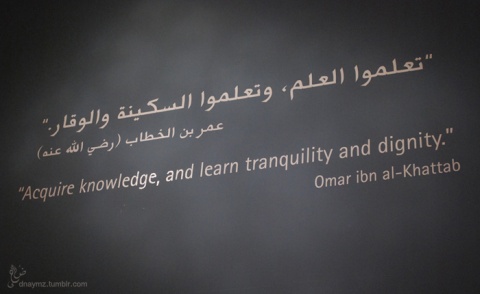
Subscribe to:
Posts (Atom)